Skip to content


How to Wash Laundry After Gastroenteritis and Prevent a Stomach Bug Spreading
- by Brodie Cook

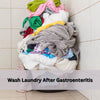
The bathroom floor is mopped. The bucket is rinsed. The sick one has finally dropped off, and you're staring at a heap of sheets, pyjamas and towels, wondering what to do with it. Do you wash it all hot? Add bleach? Rewash every item in the house?
Take a breath. After gastroenteritis (gastro, or the stomach bug), you only need to deal with what vomit or diarrhoea touched. Handle it with gloves, wash it with detergent, use a sanitiser sheet for the extra step against bacteria, use hot water, dry it thoroughly, then wash your hands. The rest of the laundry can wait.
Here is how to do that step by step, what to do when a fabric can't take the heat, and how to prevent the infection from spreading to the rest of the house.
What causes gastroenteritis, and how does it spread?
Gastroenteritis is inflammation of the stomach and intestines. Viruses are the most common cause, including norovirus and rotavirus, according to healthdirect. Bacteria such as Salmonella and Campylobacter can cause it too, and so can parasites such as Giardia. When the sheets are in your hands, you rarely know which germ you're dealing with.
Queensland Health explains that gastro spreads through contact with faeces or vomit, when hands, food, objects and surfaces become contaminated and the germ reaches the mouth. Some viruses can also travel in small airborne particles when someone vomits. People are most infectious while unwell, and can stay infectious for days or weeks afterwards.
It's a common problem in Australia. In October 2024, NSW Health warned of a surge in viral gastroenteritis driven by rotavirus and norovirus, with more than 2,700 emergency department visits in a single week. The advice to families still works now: wash hands with soap and running water, keep sick children home until 48 hours after their last symptom, clean surfaces with hot soapy water and then disinfect, and wash soiled clothing promptly in hot water with detergent.
Which laundry should you wash first?
Start with anything that has vomit or diarrhoea on it, including items splashed during clean-up. Clothes the sick person wore but didn't soil are a different job: wash them as usual.
|
What you have |
What to do |
|---|---|
|
A sheet, towel or clothing with vomit or diarrhoea on it |
Handle with care and wash it promptly (steps below) |
|
Clothes worn while sick but not soiled |
Wash as usual, following the care label |
|
A pillow, blanket or mattress that can't go in the machine |
See "What if the fabric can't take a hot wash?" below |
Step by step: how to wash soiled laundry
Step 1: Handle clothing and bedding carefully
Wear disposable gloves (rubber gloves also work), and a mask if you have one. Lift the item gently and don't shake it, as the CDC advises.
Remove solid material first. Scrape or flush it into the toilet, and put paper towels in a sealed plastic bag for the bin. If you can't wash the item straight away, bag it and keep it apart from other laundry. Don't let it sit in the hamper.
Step 2: Wash with detergent and hot water
Your usual detergent is fine. Detergent lifts the mess off the fabric, hot water helps break it down, and the rinse carries it away.
Choose the hottest setting the care label allows and, if the machine has one, the longest cycle that suits the fabric. The CDC's guidance recommends the longest available cycle for laundry soiled with vomit, diarrhoea or feces. Don't overload the machine, as a crowded drum may not rinse properly. For heavy soiling, a half load works best.
How hot is "hot"? Australian health advice says "hot" without giving a number for home machines. Norovirus is tougher than many germs, so it is the combination of detergent, heat, a full rinse, and thorough drying that does the work, not one temperature on its own.
Step 3: Dry on the highest heat the fabric allows
If the care label allows, use the highest heat setting. Check the label first, because some fabrics shrink or get damaged.
On the line, spread items out so air reaches every layer, and turn quilts and pillows partway through the day. Queensland Health suggests drying in the sun when an item can't be dry cleaned, but treat sun as a useful extra, not a replacement for heat. Bring everything in only once it's dry right through, and don't fold or stack anything damp.
Step 4: Wash your hands, then disinfect surfaces
Take off your gloves and wash your hands with soap and water for at least 20 seconds, then dry them on a clean towel or paper towel. ACT Health calls good hand washing the most effective way to prevent viral gastro. Hand sanitiser doesn't work well against norovirus, so keep it as a backup only. Wash your hands a second time before you eat or prepare food.
Then clean the surfaces that dirty items touched: the washer door and controls, the laundry basket, the toilet, benches, floors, taps, door handles and toys. Clean with hot soapy water first, then disinfect.
What if the fabric can't take a hot wash?
Wool blankets and delicate tops often can't. Choose from these:
- Washable, but only in cold or warm water: ACT Health says to add a laundry sanitiser when washing soiled clothes or bedding in cold water only. See the section below.
- Can't go in the machine at all: Queensland Health suggests dry cleaning blankets, mattresses and pillows where possible. If that isn't an option, it says to wash the item thoroughly and dry it in the sunlight.
Where does laundry sanitiser fit?
Heat, detergent and a full dry are your main steps, and they do the heavy lifting against viruses. But gastro isn't always viral, and you rarely know the cause when the infection hits.
That's where a sanitising step earns its place. Our Laundry Sanitiser Sheets add an extra sanitising step for bacteria* to the same wash. Drop one sheet in the drum with your detergent and run your cycle. There's no measuring, no second rinse and no extra bottle to hunt for at 2am.
It matters most for loads that can only go warm or cold. The sheets work in both.
So here's the routine to lean on: detergent to lift the mess, the hottest wash the fabric allows, a sanitising sheet for bacteria*, then a proper dry. Each step does a different job, and together they give you a wash you can trust. That means you can get back to looking after whoever is unwell.
To see what a sanitising claim does and doesn't show, read our guide to sanitising laundry without bleach.
Do soiled items need a separate wash?
A separate load lets you pick the hot, long cycle the soiled items need, and leaves room for them to rinse. You don't need to rewash clean clothes that never touched the mess just because they live in the same house.
How to prevent the infection spreading at home
Prevention comes down to a few small habits while the illness lasts:
- Don't share towels or face washers. Healthdirect advises against it. Give the sick person their own, and wash them in the same manner as the soiled sheets.
- Check around the spot. Because the virus can spread in the air when someone vomits, look for splashes on nearby bedding, towels or soft items.
When can you go back to normal laundry?
As soon as the soiled items are washed and dry. The 48 hours is advice on when people can go back to school or work. It isn't a wait before you can use the washing machine again.
Once everyone is well, our guide to laundry sanitiser vs detergent shows which everyday loads, like towels and bedding, might suit an extra step.
For now, the order is simple: handle the soiled items with care, wash them with detergent on the hottest setting the fabric allows, dry them fully, then wash your hands.
Health advice checked October 2026.
* Independently tested by TÜV under ASTM E2274-24, with a 99.9% reduction in Staphylococcus aureus and E. coli bacteria under test conditions. Not tested against viruses, including norovirus and rotavirus, or against other bacteria. Health authorities advise hot water, detergent and thorough drying for laundry soiled with vomit or diarrhoea. The sheets are for standard washable fabrics and are not recommended for delicates.