Skip to content

 Dishwashing
 Laundry
 Machine Cleaners
 Bathroom
 Bundles
 Refills
What Is an Enzyme Laundry Detergent and How Does It Work?
- by Brodie Cook

Struggling with stubborn stains that just won’t budge? Grease, sweat, and food spills often stay stuck even after a full wash. Many people ask, “Do enzyme detergents really clean better?”
Instead of scrubbing or relying on harsh chemicals, enzyme laundry detergent makes wonders with stains and works as well in warm or cold water. It gives you a deep clean with less energy use and less wear on your clothes.
Interesting Fact: Enzyme-based detergents were first used in Europe in the early 1900s and became increasingly popular in the 1960s. To this day, enzyme detergents are still used because they are more effective at low temperatures, energy-efficient, and gentle on fabrics.
What Enzymes Are Used in Laundry Detergent?
Enzymes are biological cleaners that break down specific types of stains. Each one has a unique role. Together, they form an enzyme blend that boosts the cleaning power of your laundry detergent.
Here are the main enzymes used in laundry detergent and what they’re good for:
Protease

Protease is one of the most effective enzymes in laundry. It targets protein-based stains like blood, milk, egg, baby formula, meat juice, and sweat. These stains can bond tightly to fabric, especially if they dry before washing.
Protease breaks protein stains into smaller fragments that dissolve in water, which helps clothes come out cleaner even in warm or cool cycles. It can also loosen other stains like fat and starch when paired with water and agitation, making it effective on most everyday loads without needing a full enzyme blend. We'll cover the others in any case
It’s ideal for daily wear, kids’ clothes, activewear, and anything exposed to body fluids or food spills. Lucent Globe detergent sheets are formulated with protease for this exact reason.
Pectate Lyase
Targets fruit-based stains like jam, tomato sauce, and yoghurt.
Cuts through natural thickeners so stains rinse out easily.
Mannanase
Breaks down thick gums found in sauces, creams, and processed foods.
Helps remove hard-to-see residue from modern foods and cosmetics.
Amylase
Targets starchy stains like rice, pasta sauce, potatoes, or cakes.
Helps loosen sticky residues that cling to fibres.
Lipase
Breaks down oils and grease such as butter, dressing, and lotions.
Useful for aprons, restaurant uniforms, and kitchen clothes.
Cellulase
Works on cotton and other natural fibres.
Removes tiny particles that cause dullness or fuzz, helping colours stay bright.
When Should You Use Enzyme Laundry Detergents?
Enzyme laundry detergents are an efficient and more eco-friendly option because they skip the chemical nasties found in many traditional powders and liquids. They don’t rely on bleach, brighteners, or fillers, which means less harm to waterways and fewer irritants on your clothes. They support modern washing habits like cooler water, shorter cycles, and fragrance-free routines. These formulas are also more cost-effective over time, helping you save money while lowering your environmental impact. They're a smart switch for anyone moving away from traditional powders filled with synthetic additives.
Removing Protein, Starch, or Fat Stains
Enzyme detergents are ideal for cleaning blood, sweat, milk, egg, oil, and sauce. These stains are made of complex molecules that bind tightly to fabric. Enzymes break them down into small pieces that rinse away with water.
Washing in Warm or Cool Water
Most enzymes work best at 30 to 40°C. This makes enzyme detergents perfect for lower temperatures or warm cycles. You don’t need hot water to clean properly, which saves energy and lowers your power bill.
Cleaning Baby and Kids’ Clothes
Baby formula, food spills, and body fluids can be hard to remove. Enzyme-based detergents clean these stains without harsh scrubbing. They’re useful for families looking for a gentler clean.
Refreshing Sportswear and Uniforms
Activewear and work clothes often hold odour, oil, and sweat. Enzymes target these residues so fabrics feel fresh again, even in short wash cycles.
Protecting Colours and Fabric Fibres
Because enzymes do the hard work, you don’t need to scrub or use strong chemicals. That means less wear on fabrics. Clothes stay smooth and colours stay brighter for longer.
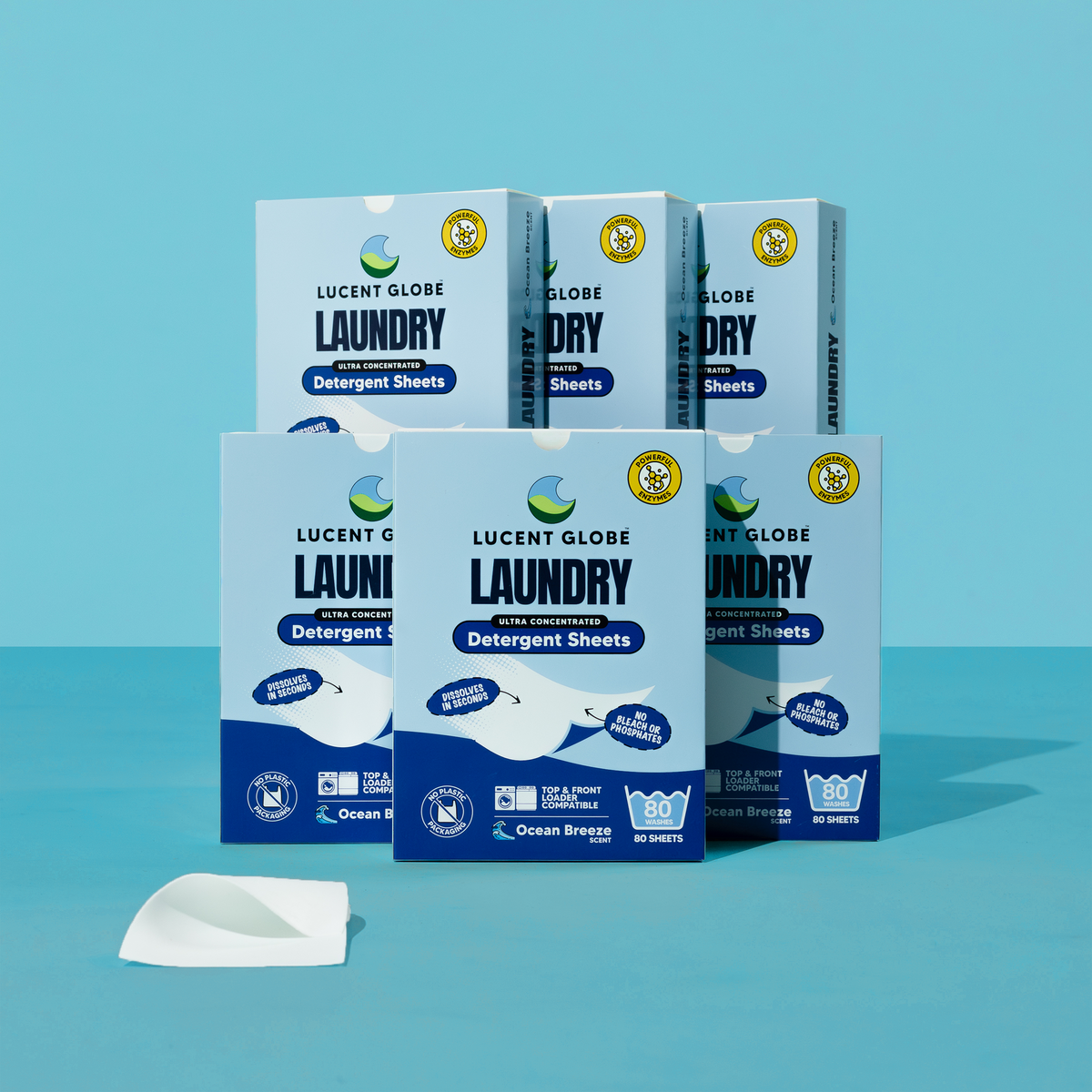
Cleaner Clothes, Fewer Chemicals
Enzyme-powered detergent sheets lift stains naturally and keep fabrics bright without bleach or other nasties.
Shop Laundry SheetsEnzymes (Our Detergent Sheets) vs Non-Bio Laundry Detergents
Not all detergents clean the same way. A modern enzyme blend is designed to break down stains at the source. These bio-based formulas rely on natural enzymes, not just surfactants or fillers. A non-bio detergent skips enzymes entirely and often needs more heat or agitation to lift stains.
If you're used to traditional laundry powder or liquid, switching to an enzyme-powered detergent like Lucent Globe can make a difference. It’s tough on stains but gentle on clothes and skin. Here's how enzyme and non-bio detergents compare:
| Aspect | Lucent Globe Laundry Detergent Sheet | Non-Bio Detergent |
|---|---|---|
| Stain Removal | Powerful on protein, fat, and starch stains | Less effective on complex stains |
| Water Temperature | Works well at 30–40°C | Often requires hot water |
| Cleaning Method | Uses protease to dissolve stains | Relies on surfactants and chemical lift |
| Formulation | Dissolvable laundry sheet | Powder, capsule, or liquid |
| Skin Sensitivity | Hypoallergenic and fragrance-free available | May include irritants or strong fragrance |
| Fabric Care | Gentle on colours and fibres | Can cause fading or fabric wear |
| Energy Use | Cold-wash compatible, lowers power use | Hot wash required for full clean |
| Additives | No bleach, parabens, or phosphates | Often includes fillers or brighteners |
| Biodegradability | Fully biodegradable and septic safe | Varies by brand and packaging |
| Best For | Daily loads, babywear, activewear | Heavy-duty cycles, stubborn grime |
Are Enzyme Detergents Safe for Sensitive Skin?
Enzyme laundry detergents are often a better choice for people with skin sensitivity. Some regular detergents rely on bleach or strong fragrance to clean. Enzyme detergents do the job without those extras, which makes them easier on skin and safe for everyday laundry.
The enzymes themselves do not cause irritation. They break down stains during the wash and rinse away easily. What matters is the rest of the formula.
Lucent Globe also offers a fragrance-free version for sensitive skin. It’s gentle on clothes and skin but still gives a deep, effective clean.
What Is the Best Form of Enzymatic Laundry Detergent?
Enzymatic laundry detergents come in different forms. The most common options are sheets, powder, and liquid.
Laundry sheets are growing in popularity because they are compact, dissolvable, and easy to use. Traditional powders are still common, but they can leave residue and often need hot water to dissolve properly. Liquids offer strong cleaning but may include extra fillers or added fragrance.
Here’s how they compare:
| Form | Laundry Detergent Sheets | Laundry Powder | Liquid Detergent |
|---|---|---|---|
| Format | Pre-measured, dissolvable sheets | Dry, scoopable powder | Pourable liquid or gel |
| Ease of Use | No mess, no measuring | Requires scooping | Can spill or over-pour |
| Dissolution | Dissolves fast in cold or warm water | May leave residue in cold water | Mixes easily, but can be thick |
| Storage | Compact and lightweight | Bulky packaging | Heavy and space-consuming |
| Cleaning Power | Consistent enzyme release | Varies by scoop size and water temp | Strong but may rely more on surfactants |
| Additives | Free of nasties | May include brighteners or fillers and harsh chemicals | May include brighteners or fillers and harsh chemicals |
| Best For | Daily use, travel, small spaces |
How to Use Lucent Globe and Enzyme Detergent for Stain Removal
For daily laundry, use one sheet per load. Place it in the drum with your clothes and run a normal wash cycle. For bigger loads or dirtier clothes, use two sheets instead.
How to Pre-Treat Tough Stains
If you’re dealing with dried stains, like sauce, sweat, or food spills:
-
Tear off a small piece of the sheet
-
Dissolve it in a cup of warm water
-
Dab the liquid onto the stained fabric
-
Wait 15 to 30 minutes
-
Wash the item using your regular cycle
This gives the enzymes time to work before the wash begins. It’s an easy way to help lift stubborn marks without needing strong chemicals or scrubbing.
Common Questions About Enzyme Washing
Can enzyme detergent be used on wool or silk?
Most enzyme detergents are not recommended for delicate fibres like wool or silk. The enzymes may weaken natural fibres over time. Always check the care label and choose a detergent marked as safe for delicates if needed.
Does enzyme detergent remove pet hair from clothes?
Enzymes do not break down pet hair, but they can help remove the oils and odour left behind. For better results, brush off loose hair before washing. Enzymatic detergent will still clean the fabric more thoroughly than non-bio alternatives.
Will it remove dried ketchup stains?
Yes. Ketchup stains contain sugars, starch, and pectin. Enzyme blends with amylase and pectate lyase work well on these compounds. For dried stains, pre-soaking improves removal.
What’s the difference between bio and enzyme-powered detergent?
“Bio” is short for biological, which means the detergent contains enzymes. Enzyme-powered detergent is simply another way to say the same thing. Non-bio formulas do not use enzymes and usually rely on surfactants or heat to clean.