Skip to content

 Dishwashing
 Laundry
 Bundles
 Surfaces
 Toilet
 Handsoap
 Multi-Purpose
 Floor
FloorHard Water Stains in Your Toilet Bowl? Here's a solution How to Clean Them
- by Brodie Cook

Updated: 16-06-2026
What Do Hard Water Stains Look Like in Your Toilet Bowl?
Hard water stains in your toilet bowl are just hard mineral deposits. They form when calcium and magnesium minerals settle out of your local water supply. If you want to know what hard water stains look like, look right at the waterline. They usually show up as a rough, crusty, off-white hard water ring. You might also spot a chalky mark or jagged buildup tucked up under the rim jets.

Clean porcelain is naturally smooth. But these hard water rings create a permanent texture change on your porcelain surface. Regular surface stains sit flat on the glass finish and wipe away fast with a standard brush. A true hard water stain is raised, rough to the touch, and firmly bonded to the bowl. Over time, this pale chalky crust darkens, transforming a simple mineral mark into an unsightly, deeply embedded blemish that resists standard scrubbing.
Clean porcelain is naturally smooth. But these hard water rings create a permanent texture change on your porcelain surface. Regular surface stains sit flat on the glass finish and wipe away fast with a standard brush. A true hard water stain is raised, rough to the touch, and firmly bonded to the bowl. Over time, this pale chalky crust darkens, transforming a simple mineral mark into an unsightly, deeply embedded blemish that resists standard scrubbing.
What Causes Brown Stains in a Toilet Bowl?
Many people wonder what causes brown stains in toilet bowl waterlines and rims. While the initial scale starts out as a pale mineral deposit, the dark change in colour is caused by plumbing rust. Your water supply carries tiny iron particles from old metal pipes. Because the calcium crust forms a rough surface, it acts like a physical trap for these heavy metals. The iron hitches a ride on the scale, turns into rust, and locks those stubborn brown stains in toilet bowls in place.
You cannot use standard chlorine bleach or a basic toilet cleaner to solve this issue. This common mistake actually makes the problem much worse. Bleach is a powerful oxidiser, not a descaler. When you pour bleach onto an iron deposit, it causes a fast chemical reaction. The chlorine oxidises the iron instantly. This reaction rusts the mineral bond and locks the dark orange or brown colour permanently into the porcelain surface.
To learn how to get rid of brown hard water stains in toilet bowls, you must use a formula that dissolves the alkaline mineral base. Regular toilet cleaner products only sanitise the bowl. They do not break down the heavy mineral deposits.

Remove Hard Water Stains the Easy Way
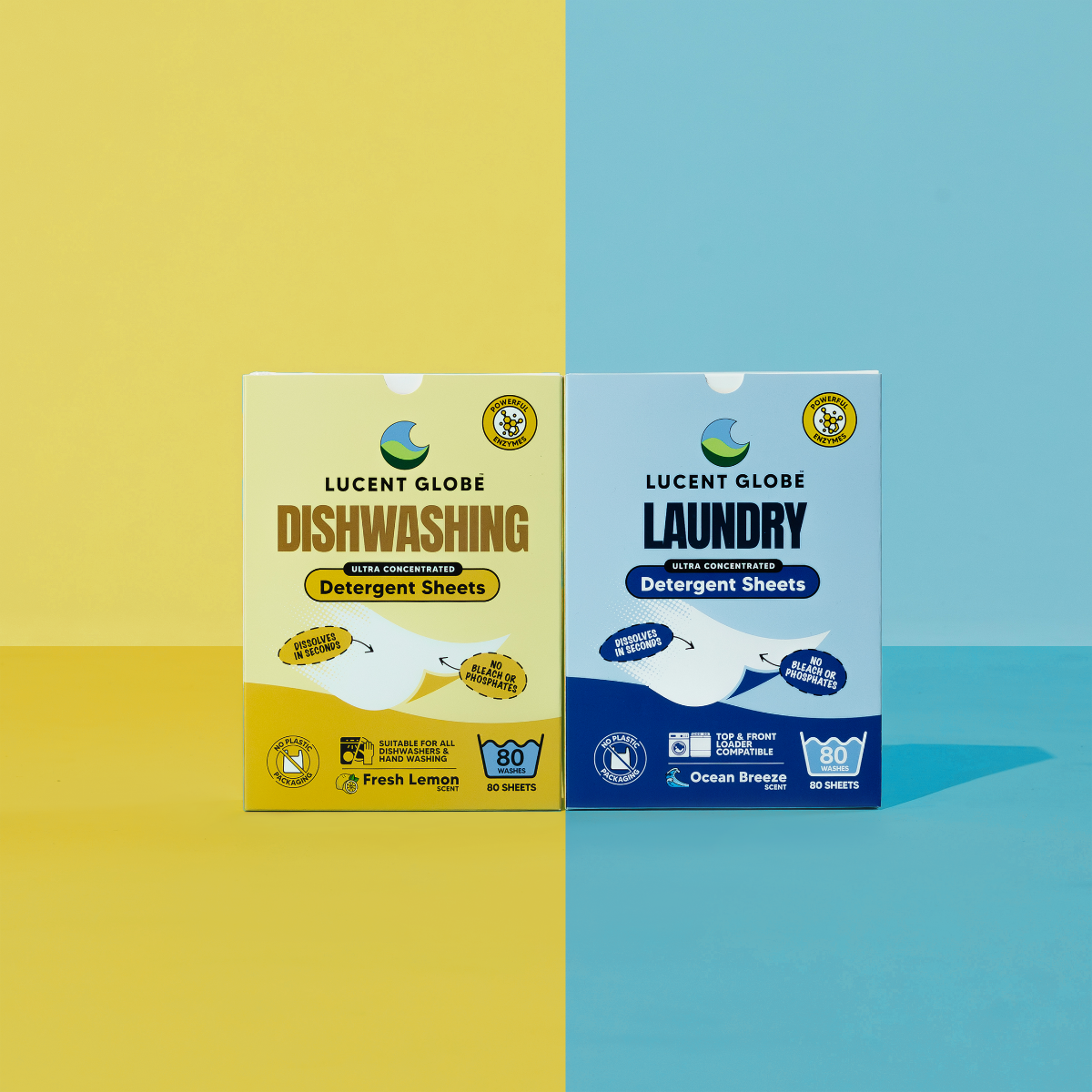
Lucent Globe Toilet Cleaning Sheets dissolve fast to break down hard water stains and mineral build-up. No bleach, no fumes, just a clean, fresh toilet bowl that’s safe for your pipes and septic system.
Shop Toilet Cleaning SheetsHow to Remove Hard Water Stains from a Toilet (Step-by-Step Guide)
Normal cleaning routines with the usual toilet brush fails because they do not break down the mineral bonds. If you want the best way to remove hard water stains from toilet porcelain, you must isolate the stain and apply an acidic treatment.
Follow this step-by-step guide to dissolve heavy rust and lime scale safely:
-
Isolate the Bowl Water: Locate the water supply valve behind the toilet. Turn it clockwise to shut off the incoming flow. Flush the toilet twice to empty the standing water from the bowl. This keeps your cleaning solution concentrated so it does not dilute in the water.
-
Apply the Acid Solution: Pour a generous amount of white vinegar or a citric acid mixture directly onto the exposed mineral deposits. For severe buildup, a commercial product like CLR works fast to break down tough scale. Let it sit for at least an hour, or overnight for deep stubborn brown stains.
-
Scrub the Scale Safely: Put on protective gloves before you begin. Wear a mask if you are using strong formulas. Take a stiff brush or a toilet pumice stone to scrub the ring. You must get the toilet pumice thoroughly wet before scrubbing. A dry stone will scratch the porcelain bathroom surfaces permanently.
-
Flush and Rinse: Turn the water supply valve back on to fill the cistern. Flush the toilet to rinse away the loosened mineral deposits and cleaner residue. Your bowl will return to a sparkling clean state.

Why Denture Cleaning Tablets and Quick Fixes Fail on Stubborn Marks
Many popular internet hacks suggest using denture cleaning tablets or a homemade baking soda and vinegar mix to clean a dirty bathroom. While these quick fixes fizz nicely in the bowl, they fail on a true hard water stain. The bubbly chemical reaction looks impressive, but the resulting solution lacks the real acidic strength needed to break down a heavy mineral deposit.
Denture cleaning tablets are designed to lift light organic stains from acrylic surfaces. They do not have the deep surfactant density required to dissolve thick, multi-layered rust and lime scale bonds. If you try to mix vinegar with baking soda, the alkaline soda actually neutralises the acid in the vinegar. This leaves you with a weak product that cannot penetrate a stubborn hard water ring. These social media trends are fine for light weekly bathroom maintenance, but they will never remove a tough, deeply embedded rust and lime crust from your porcelain.
PRO TIP: Clean the Tank to Prevent the Ring
The ultimate expert tip to prevent water stains in your toilet is to shift your focus away from the bowl entirely. Most homeowners scrub the porcelain surface repeatedly without realising that the true source of the problem sits directly inside the toilet tank (cistern). If you have hard water, mineral buildup accumulates silently inside the tank infrastructure every single hour.
This hidden scale creates a continuous loop of contamination. Every single time you flush the toilet, the rushing water picks up loose bits of dissolved calcium, lime, and pipe rust from the cistern. The water drops these active minerals straight into the bowl, where they instantly dry and form a new hard water ring at the waterline.
Important Plumbing Disclaimer & Warning: Before pouring any treatment into your cistern, inspect your tank hardware. If your toilet is old, the rubber flapper and seals may already be worn out, brittle, or corroded by mineral build-up. Cleaning away the scale can sometimes reveal existing gaps in deteriorated rubber, which may cause a continuous flush leak. Lucent Globe is not responsible for any pre-existing plumbing wear or component failures. If your seals are already damaged, they should be replaced by a licensed professional.
To stop the mineral cycle safely, you must avoid harsh commercial bleach blocks. Chemical chlorine tablets will rapidly destroy rubber components and cause severe plumbing leaks. Instead, a mild home treatment like two cups of white vinegar can be poured into the cistern once a month. This gentle solution safely clears light scale off the plastic fill valve without damaging healthy seals. This pro bathroom trick neutralises minerals while they float in the water supply, stopping the cascade before it ever hits the open bowl surface.
How Lucent Globe Cleans Toilet Limescale Without Harsh Chemicals
Traditional toilet bowl cleaner products rely on volatile synthetic acids or heavy toxins to eat away at mineral buildup. These aggressive chemicals create dangerous fumes inside your bathroom. They can also corrode your household metal pipes and disrupt local ecosystems after you flush.
Our Lucent Globe Toilet Cleaning Sheets use a smarter, plant-derived formula to clear tough hard water stains without compromising the environment. Instead of burning the scale away, our sheets break the mineral bonds through a safe process called chelation.
Our sheet formula relies on a smart mix of natural ingredients to deliver a sparkling clean result:
-
Sodium Citrate: This plant-derived salt acts as a chelating agent that binds directly to calcium and magnesium ions. By sequestering these hard water minerals, it changes their crystalline matrix into a highly soluble fluid that washes away easily with a brush. Its exceptional environmental profile is formally recognised under the U.S. EPA Safer Choice Chemical Criteria, which classifies sodium citrate as a low-hazard "Hydroxy Carboxylic Salt" due to its safe, natural origin in biological fermentation and metabolic processes.
-
Sodium Bicarbonate: This is natural baking soda. It adds gentle physical friction to scrub away tough stains without scratching the glassy porcelain finish.
-
Tetrasodium Dicarboxymethyl Glutamate: This biodegradable element acts as an anti-redeposition agent. It creates a temporary protective shield inside the bowl, which stops lifted rust and grime from setting back down onto your porcelain after a brush.

Frequently Asked Questions
Does a running toilet make hard water stains worse?
Yes. A running toilet accelerates hard water stain formation by up to five times the normal rate. When water constantly leaks from the cistern into the bowl, it exposes the porcelain to a non-stop stream of dissolved calcium and magnesium. As air circulates inside the bowl, the moisture constantly evaporates, leaving behind layer upon layer of microscopic mineral deposits. This rapid cycle hardens a light waterline mark into a thick, crusty ring within a matter of weeks. Fixing a leaky flapper valve is the first step to keeping your porcelain clear.
Can water temperature affect how fast mineral scale forms?
Water temperature plays a major role in how minerals behave inside your plumbing system. Hot water causes calcium carbonate to precipitate out of fluid much faster than cold water, which is why hot water pipes clog easily. Inside your toilet, cold water sits stagnant between uses. This resting period allows the heavy minerals to settle out of the fluid and stick directly to the smooth porcelain glaze, especially along the rim jets where the water dries out completely between flushes.
Why do pink or black rings sometimes grow on top of hard water stains?
Mineral scale is incredibly porous and acts exactly like a sponge. The rough surface of a hard water ring traps airborne bacteria and mould spores floating in your bathroom. A pink ring is usually Serratia marcescens, a common bacterium that feeds on phosphorus and fatty residues found in soap or waste. Black rings are typically fungal mould colonies. These organisms hide inside the deep microscopic grooves of the calcium crust, making them impossible to wipe away until you completely dissolve the underlying mineral scale.
Can hard water deposits cause my toilet to lose flushing power?
Yes. Over time, thick calcium and lime scale deposits accumulate directly inside the small syphon jet holes located under the rim of your bowl. When these holes clog with mineral scale, they restrict the volume and velocity of the water entering the toilet. This restriction ruins the vortex action of the flush, leaving the bowl poorly cleared and requiring you to flush multiple times. Descaling under the rim with an acidic solution opens these ports to restore original water pressure.